
The Okavango River Delta and other wet areas are part of the 970,000-square-mile Kalahari Basin, which includes the desert. More than half of Namibia and almost all of Botswana are part of this basin.
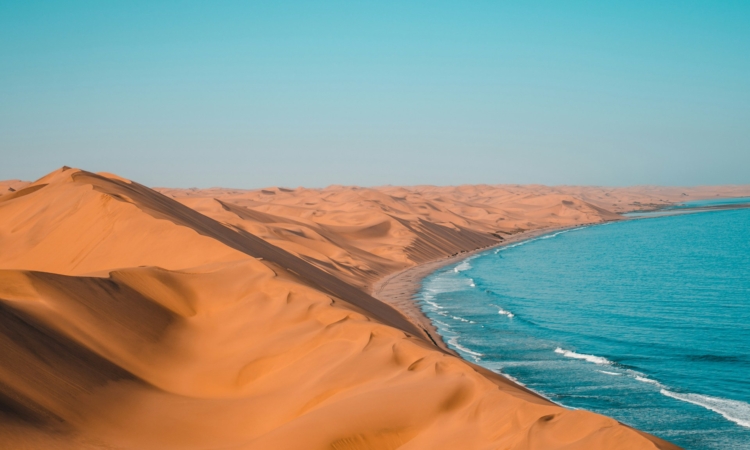
The Kalahari sand dunes make up the world’s largest stretch of continuous sand. Some of these dunes even reach westward into the Namib Desert. Even though the Sahara Desert is larger overall, only about 15% of it is covered by sand dunes.
There is more plant life on the dunes than expected, including grass, bushes, and trees that lose their leaves. These plants have adapted to use the little rainfall and to survive large changes in temperature.
In summer, temperatures can go up to 45°C (115°F), and in winter nights, they can drop to -15°C (7°F).
In the wetter north and east of the Kalahari, there are open woodlands made mostly of camelthorn trees, a type of acacia. The camelthorn is an important tree in the desert because it adds nutrients to the soil around it and gives shade to animals.
Other trees that grow here include the silver cluster-leaf, blackthorn, and shepherd’s tree. In the dry southwest, there is much less plant and animal life, but the Hoodia cactus is common.
The San people have used this cactus for thousands of years to stop hunger and thirst during long hunting trips.
Plants & Animals
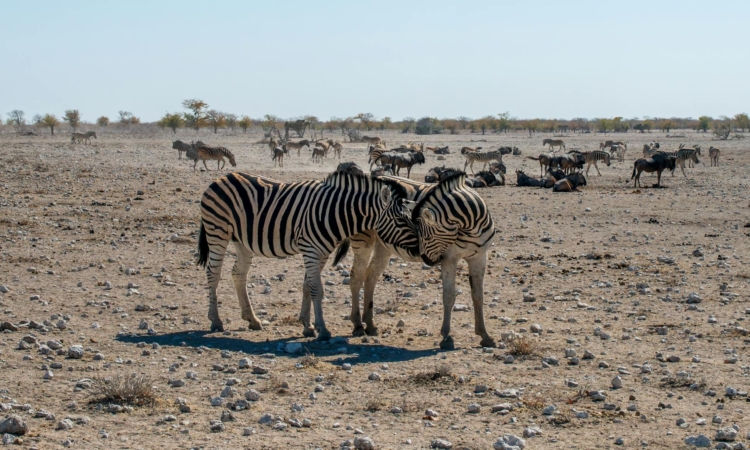
Some animals that have adapted to the dry conditions of the Kalahari include the Kalahari lion, meerkats, gemsbok (a large type of antelope), and sociable weavers (a small bird).
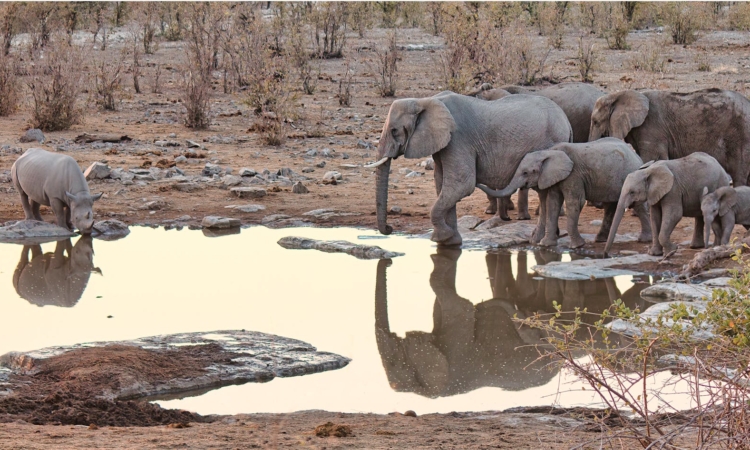
Most animals in the Kalahari have learned to survive by using water from plants or going long periods without water. Many reptiles live in the Kalahari, including rock monitors, puff adders, and Cape cobras.
While some animals and birds live in the desert all the time, many others are migratory and only come when there is enough water. Besides the Hoodia cactus, other edible plants used by both people and animals include wild cucumbers, gemsbok cucumbers, and creeping tsamma melons.