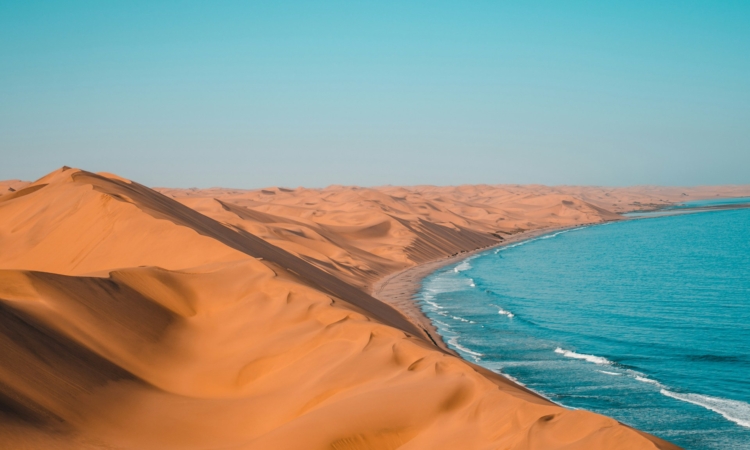

In Namibia’s Namib Desert, Sossusvlei is a large area that covers about 32,000 square kilometers (12,356 square miles). It is known for its red sand dunes and the salt pan called Sossusvlei, which is surrounded by these dunes. Some of the dunes reach more than 300 meters (over 1,000 feet) in height.
Sossusvlei is the second most visited tourist site in Namibia. It is located inside Namib-Naukluft Park and is part of the Namib Sand Sea World Heritage Site. Visitors can only enter between sunrise and sunset and must travel about 66 kilometers from the Sesriem entrance to reach Sossusvlei.
A 4×2 vehicle can be used on the tarred road from Sesriem, but the last 6 kilometers are very sandy and can only be driven with a 4×4. Some people walk this final part or use a 4×4 shuttle service.
To visit Sossusvlei, you must buy a permit from the Sesriem office. The best times to explore are early in the morning or late in the afternoon. These times provide cooler weather and better lighting for photos, as the sun highlights the colors of the dunes. Midday temperatures can be very high.
The name “Sossusvlei” comes from two languages. “Vlei” is Afrikaans for “marsh,” and “Sossus” is a Nama word meaning “no return” or “dead end.” The name refers to Sossusvlei being an endorheic drainage basin, where the Tsauchab River ends with no outflow.
It is helpful to have a map when visiting, especially to locate the popular dunes. Many visitors enjoy climbing the tall dunes. From the top, you can see the Namib Sand Sea and understand why it is called that. Visitors often describe the landscape as “other-worldly.”
Some of the tallest sand dunes in the world are found here. Big Daddy, the tallest dune in Sossusvlei, is about 340 meters high. However, Dune 7, near Walvis Bay, is considered the highest dune in the Namib Desert at around 385 meters.
Sossusvlei is an oval-shaped clay pan covered by a layer of salty sand. The Tsauchab River shaped the pan over time, but actual flooding is rare and may not happen for several years. The river carries little water and is usually dry.
About two kilometers from Sossusvlei is another clay pan called Dead Vlei. It was once an oasis with many acacia trees. But when the river changed its path, the trees died.
Now, Dead Vlei is filled with blackened, dead trees, believed to be between 500 and 600 years old. These trees stand in sharp contrast to the bright orange dunes and the white salt floor of the pan.