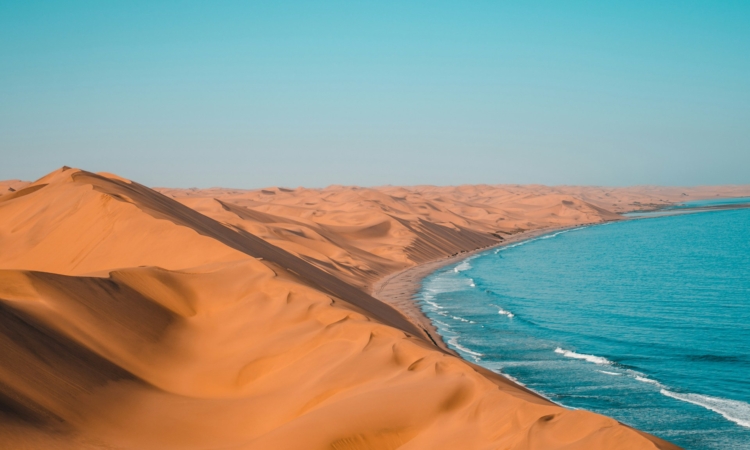

Want to know the meaning of Sossusvlei? Sossusvlei is a clear example of Namibia’s clean desert landscape. It is a salt and clay pan located in Namib-Naukluft National Park, which is Africa’s largest protected area. Sossusvlei is one of Namibia’s most visited places and is known for its large red sand dunes, which are some of the tallest in the world.
The word “Sossusvlei” comes from the Afrikaans and Nama languages. “Vlei” means marsh in Afrikaans, and “Sossus” means dead-end in Nama. Even though the name Sossusvlei is often used for the whole area, including Dune 45, Deadvlei, and Hiddenvlei, it actually refers only to the salt and clay pan at the end of the Tsauchab River.
The name “dead-end marsh” comes from the way the high dunes stop the Tsauchab River from flowing any further. Because Namibia is very dry, the river hardly ever reaches the pan. But after heavy rain in the Naukluft Mountains, the pan sometimes fills with water and becomes a lake. When this happens, many people travel to see it.
The red sand dunes of the Namib Desert formed over millions of years. The Orange River carried red sand into the Atlantic Ocean. The Benguela current then pushed the sand north. After that, the waves brought the sand back to the land, and the wind blew it inland to build the dunes.
The sand dunes in the Namib change shape all the time because of the wind. In the Sossusvlei area, the wind comes from all directions. This creates dunes with points in many directions, called “star dunes.”
To explore this special part of Namibia, you can start planning your trip today.